
The Bartender Has Had Enough
A German court ruling, a hotelier who hires actors, and the slow death of philoxenia.

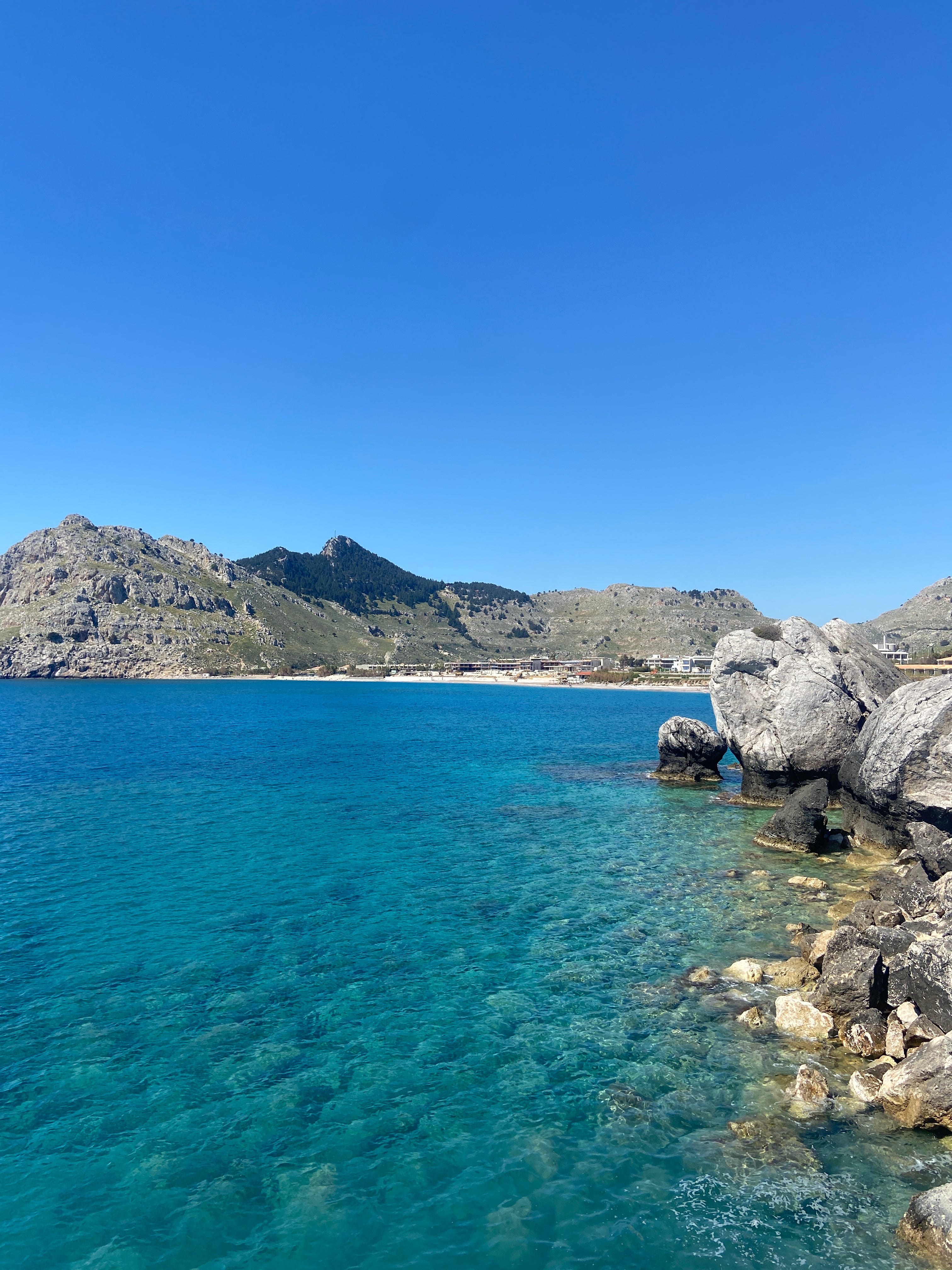
Towels everywhere. Draped over empty first-row sun loungers, on the sand under an artificial palm tree, on stools at the oceanside bar and even on the concrete floor next to the pool. This has become an all-too-familiar scene in recent years at resorts during peak travel season.
We all know the rush of stress to get the entire family to breakfast on time, stuff everyone’s throats full of mediocre, soggy, yet somehow addictive, pancakes and then sprint to indented sun beds by the pool or on the beach, only to get there and realize the prime real estate is already taken by ghosts who have laid down their towels and gone back to snooze.
It results in a race to the bottom — not too dissimilar to the Tour de France in the early 2000s — where even those who want to play by the rules are dragged into the muck due to a lack of enforcement. Now, before you stop reading because you feel (rightly so) like I’ve ranted and raved about this before, this is not a diatribe against what I call the all-inclusive hoarders1. It is, instead, a question about the type of travelers we should aim to be.
Towards the end of last week, I found myself spitting out my morning coffee directly onto my iPad screen when I came across the following headline: German tourist wins payout after losing sun lounger race.
A race from breakfast to the beach in Greece last summer got so heated that last week a court in Hanover ruled that a German tourist was entitled to €900 in compensation for not finding any available sun loungers for the entirety of his family’s stay at a hotel, despite waking up at six every morning to commence his search. The family, including young kids, spent most of the vacation with their towels on the floor. The tour operator that sold them the trip was found not to have sufficiently enforced the hotel’s ban on reserving seats and not to have delivered on the package vacation that implied access to sun beds2.
Although seemingly symbolic and potentially a quirk of European tort law, the precedent could drive some much-needed accountability for the enforcement of anti-social behavior in holiday settings. Sadly, it might just come down to a random judge in Northern Germany to teach us some manners.
The news dovetailed nicely with a conversation I had the week prior with one of my favorite hotel bartenders in Greece, Yannis.
“Ela, Nicola, let me tell you something. Fifty-five years I’ve been in this business and I can tell you the tourists have gotten much worse.”
He went on to tell me that very few guests coming to the bar say please or thank you. I observed this myself, whereby most interactions consisted of “two beers” or “coffee, black”. It was astonishing to see how few guests engaged in any exchange of pleasantries or interest.
Nobody asked for restaurant suggestions or how the winter and olive harvest had gone. Nobody cared; they just wanted to get back to the pool as quickly as possible.
“Everyone watches the Olympics on TV. But nobody visiting cares about Pheidippides3 or about the ancient history of the game.” He gestured dramatically to the sunburned lobsters smoking by the adults-only pool.
It reminded me of another shop owner on the island of Samos three years ago who lamented how nobody visiting the island nowadays even knows that Pythagoras was from there. He mentioned how all the shops used to sell books on Ancient Greek history, but now it is mostly James Patterson thrillers.
Although I find this trend greatly depressing (no offense, James Patterson), it is, in many regards not my problem. If you don’t want to show an interest beyond the rays of the sun of the place you are choosing to spend your hard-earned break, that’s fine by me, we probably won’t cross paths. What concerns me more, however, is the sense of rudeness and entitlement that certain tourists have built up. Resort towns and tourist hotspots are becoming the landside equivalent of airport terminals — zones where everyone maintains a selfish tunnel vision to reach their objective and does not engage with the world around them in a meaningful way.
In Greece, this undercuts the time-honored tradition of philoxenia and results in a vicious cycle where the art of hospitality — which requires a two-way exchange — is lost. If generous hospitality and service are not appreciated, they will inevitably be provided less and eventually forgotten about.
A note on philoxenia
Everyone always talks about the generous hospitality of the place they have just visited — think Southern hospitality, Italian, Japanese, Botswanan… the list goes on and on — but the Greeks have no match in this arena.
In Greece, the highest degree of hospitality is a given; it is a way of life, passed down from the myths at Mount Olympus to the Ancient Greeks. One could also argue that it was one of the first unifying notions of Greek identity at the time of warring city-states.
The best way to grasp this is to look at the etymology of the Greek word for hopsitality: philoxenia. The literal meaning of which is friend (phílos) to the stranger (xénos).
Legend has it that Greek Gods would test their subjects by coming down from the skies in disguise to see if they would be treated with the right dose of kindness. From there, it became a sacred act and cultural obligation that no Greek takes lightly. Those who would not live up to the standard of protecting strangers would risk Zeus’ wrath.
Greeks view their guests as sacred. They will feed you their best food, make sure you are comfortable and leave you wanting for nothing. They won’t expect anything in return except for your gratitude and, perhaps one day, the same treatment when they are your guest.
Crucially, though, it is not an exchange of favors; it is a way of being. Greek hospitality is not transactional in the way we experience it in most Western cultures. To a Greek, generously welcoming a stranger is as basic manners as a Brit standing in queue and apologizing incessantly to you about the rain. It is ingrained in their cultural heritage.
Read more here.
A leading hotelier from Southern Italy recently told me the following over lunch, “I no longer hire people who have a background in hospitality. I prefer to head down to the local theater school and hire directly from there. I can always teach them the other skills, but I cannot teach performance.” That is what he has deemed the character of his hotel: a performance for his valued guests.
The character of a place is what makes people feel something unique and continue returning. That character is revealed through human interaction. If we lose that, then we might as well put on our VR headsets and spend a week on the couch with a vitamin-D stimulating lamp.
This is about more than beach towels and saying please to the bartender (yes, even if the beers are included in your package), this is about securing the future of travel.
How to claim back your travel experience with GlobeFoxing
At GlobeFoxing, we are all about travel done differently. We don’t just write about the world of travel, we make it happen. If you would like GlobeFoxing to craft a trip catered specifically to your needs, and avoid the classic pitfalls of traveling abroad, then just get in touch here!

The hoarder: The hoarder is omnipresent at all-inclusive resorts. They are everywhere and nowhere all at once. Their spirit is in the six towels they have ‘reserved’ on the front row loungers at the beach at 6 AM against all convention. They know you will resent them for it when they casually show up four hours later. And, guess what? They won’t care because they are the adult equivalent of the kid who stole everyone else’s toys in school.
I wonder whether I could get compensation from the hotel in Southern Spain that had pictures of their pool on their website, only for it to turn out to be the neighbor’s pool, which the hotel offered no access to. That actually happened to me 10 years ago and played a small part in the inspiration for GlobeFoxing.
The central figure in the origin story of the marathon. Legend has it that he ran approximately 40 kilometers from Marathon to Athens to deliver news an Athenian victory at the Battle of Marathon, only to collapse dead shortly thereafter. The Athens Marathon, held every year in November, largely follows this arduous route.
Such truth Nicola, thanks for the interesting read. And I love that you've taught me a new word today - philoxenia - it's a good one that is right in line with my "small acts of kindness can make a big difference" credo.
I am lucky in my way of travel to mostly avoid having to interact with the hoarders and the lobsters. We are always kind and courteous on Duende, and I do hope to show our version of hospitality one day soon. Maybe it will rival what you experience in Greece.
The subject is a bit of downer, and it's true, I've seen it myself. A certain type of tourism infrastructure attracts a certain type of traveler for sure (namely someone who doesn't actually care about travel at all, and is really just there for the weather). I did enjoy some of those vivid descriptions of all-inclusive life though. The soggy but somehow addictive pancakes? I've been on exactly one package trip, paid for by work, but you bet there were average pancakes on offer, and I had more than one.